

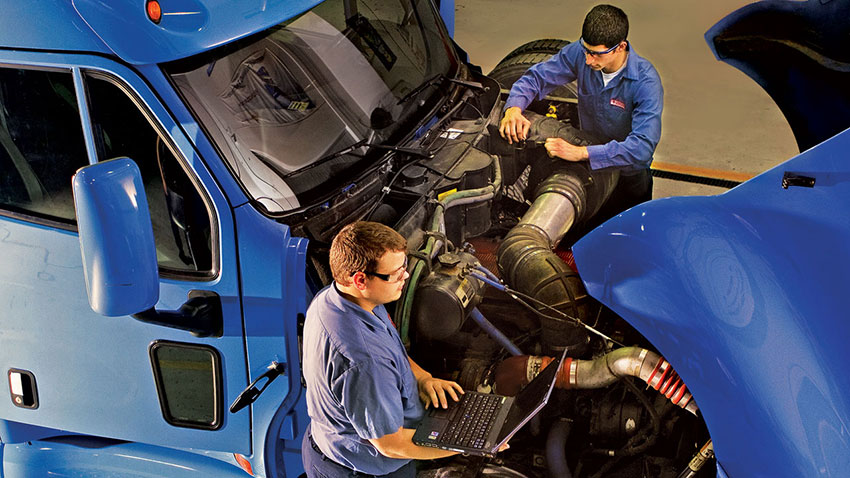
When something feels wrong with a heavy truck, the way the issue is described can make a big difference. A vague description like “it feels off” or “it makes a weird noise” may be true, but it does not always give a heavy duty mechanic enough information to start in the right place.
For fleet owners, truck drivers, contractors, and operators in Calgary, understanding a few common heavy truck diagnostics terms can make service conversations easier. Better descriptions can help a technician narrow down the issue faster, which may reduce diagnostic time, avoid confusion, and get the truck back to work sooner.
At West Tech Mobile, we provide heavy truck repair, diagnostics, fleet service, and preventative maintenance for commercial trucks and equipment in Calgary and the surrounding area. These are some of the most useful truck diagnostics terms to know before you call a mechanic.
Quick Answer: Why Do Heavy Truck Diagnostics Terms Matter?
Heavy truck diagnostics terms help drivers and fleet managers describe symptoms more clearly. If you can explain whether a truck is misfiring, surging, knocking, hesitating, bottoming out, or feeling sluggish, a technician has a better starting point for diagnosis.
These terms do not replace professional diagnostics, but they can help you communicate what is happening, when it happens, and how serious the issue may be.
1. Backfire
A backfire is a loud popping or gunshot-like sound that may come from the engine or exhaust. It can happen when unburned fuel ignites in the exhaust system or when combustion happens at the wrong time.
On a heavy truck, backfiring may point to fuel delivery issues, timing concerns, air intake problems, sensor issues, or other engine performance problems. It should not be ignored, especially if it is paired with power loss, rough running, or warning lights.
2. Bottoming
Bottoming refers to a harsh impact, bang, or heavy vibration when the truck goes over bumps, dips, or rough road surfaces. The issue is often felt through the cab, suspension, steering wheel, or frame.
Possible causes may include worn shocks, suspension problems, overloaded conditions, damaged springs, worn bushings, or other undercarriage concerns. For heavy trucks and equipment, bottoming can lead to more damage if the underlying issue is not corrected.
3. Bucking
Bucking describes a lurching, jerking, or uneven feeling while the truck is accelerating, shifting, or maintaining speed. It may feel like the engine or transmission is not delivering power smoothly.
Possible causes may include fuel delivery problems, transmission issues, sensor faults, air intake restrictions, or engine management concerns. If bucking happens under load, while climbing, or during highway driving, it is worth booking diagnostics before the issue becomes a breakdown.
4. Dieseling
Dieseling happens when an engine continues to run briefly after it has been shut off. The term comes from combustion continuing without the normal ignition sequence.
Depending on the vehicle and engine type, this may point to fuel, timing, temperature, carbon build-up, or engine management issues. A truck that continues running after shutdown should be inspected, especially if it happens repeatedly.
5. Hesitation
Hesitation is a delay or loss of power when you press the accelerator. The truck may feel like it pauses, stumbles, or struggles before responding.
Heavy truck hesitation can be caused by low fuel pressure, poor fuel quality, restricted filters, air intake problems, boost issues, weak electrical supply, sensor faults, or other drivability problems. If hesitation happens while loaded or merging into traffic, it can also become a safety concern.
6. Knocking
Knocking is a rattling, pinging, tapping, or metallic sound from the engine area. In some cases, it may be related to abnormal combustion. In others, it may point to mechanical wear or internal engine concerns.
Because knocking can range from minor to serious, it is important to pay attention to when it happens. Note whether it occurs during acceleration, under load, at idle, on startup, or after the engine warms up.
7. Misfire
A misfire happens when one or more cylinders are not contributing power properly. The truck may run rough, shake, lose power, use more fuel, or trigger a warning light.
Possible causes may include fuel delivery issues, injector problems, compression concerns, sensor faults, electrical problems, or engine control issues. For commercial trucks, a misfire should be diagnosed quickly because it can affect power, fuel economy, emissions systems, and reliability.
8. Shimmy
Shimmy is a side-to-side shake or wobble that may be felt through the steering wheel, tires, suspension, or cab. It can happen at certain speeds, while braking, or after hitting bumps.
Possible causes may include tire imbalance, uneven tire wear, loose steering components, suspension wear, wheel bearing issues, brake rotor problems, or alignment concerns. A shimmy should be taken seriously because it may affect handling and tire life.
9. Sluggish
A sluggish truck feels underpowered. You may press the accelerator and notice slow response, poor pulling power, weak acceleration, or difficulty maintaining speed under load.
Sluggish performance may be related to fuel restrictions, DPF problems, turbo or boost issues, air intake restrictions, sensor faults, transmission concerns, or general maintenance problems. If the truck is part of a fleet, sluggish performance can also affect productivity and fuel costs.
10. Surge
A surge is a sudden increase or change in engine speed or power that happens without the driver asking for it. The truck may feel like it is speeding up, pulsing, or delivering power inconsistently.
Surging can be linked to fuel pressure problems, air intake issues, sensor faults, throttle control issues, or engine management problems. It should be diagnosed because inconsistent power delivery can create drivability and safety concerns.
When Should You Book Heavy Truck Diagnostics?
You should book heavy truck diagnostics when a symptom is repeated, getting worse, affecting power, causing warning lights, creating unusual noise, or making the vehicle unsafe to operate.
It is especially important to book diagnostics if the truck is used for commercial work, hauling, fleet routes, construction, or jobsite service. Waiting too long can turn a manageable issue into downtime, roadside repair, or a more expensive failure.
Diagnostics may be needed if you notice:
- Warning lights or fault codes
- Loss of power
- Rough running or misfires
- Unusual engine noises
- Hard starting
- Poor fuel economy
- Smoke or exhaust concerns
- DPF or emissions-related problems
- Electrical or sensor issues
- Truck performance that changes under load
How to Explain a Truck Problem to a Heavy Duty Mechanic
The more specific you can be, the better. You do not need to diagnose the issue yourself, but you can help the technician by describing what is happening and when it happens.
Before calling for service, try to note:
- When the problem started
- Whether it happens at idle, during acceleration, while braking, or under load
- Whether it happens when the truck is cold or warmed up
- Any warning lights or fault codes
- Any recent repairs or maintenance
- Whether the issue is constant or intermittent
- Any sounds, smells, smoke, vibration, or loss of power
This information can help a technician choose the right diagnostic path and avoid wasting time chasing the wrong symptom.
Preventative Maintenance Helps Catch Problems Earlier
Diagnostics are important when something is already wrong, but preventative maintenance can help catch many issues before they turn into downtime. Regular inspections, fluid checks, filter changes, brake inspections, electrical checks, and fleet maintenance can reveal early warning signs before a truck is stuck on the side of the road.
If your trucks are used for commercial work, read more about our preventative maintenance programs for heavy trucks.
For emissions-related concerns, you may also find our guide on heavy truck DPF maintenance helpful.
West Tech Mobile: Heavy Truck Diagnostics in Calgary
West Tech Mobile helps truck owners, fleet managers, contractors, and commercial operators with heavy truck diagnostics, repair, and maintenance in Calgary and the surrounding area. Our shop is located at #22, 5555 51 Ave SE in Calgary, close to Foothills Industrial, Peigan Trail, Barlow Trail SE, 52 Street SE, and Glenmore Trail.
We work with heavy-duty trucks, trailers, commercial vehicles, equipment, and fleets. Whether your truck is misfiring, surging, hesitating, losing power, showing fault codes, or making a sound you cannot identify, our team can help diagnose the issue and recommend the right repair.
Need heavy truck diagnostics in Calgary? Contact West Tech Mobile or call 403.265.5699 to book service.
Heavy Truck Diagnostics FAQs
What is heavy truck diagnostics?
Heavy truck diagnostics is the process of identifying the cause of a truck problem using technician inspection, symptom review, fault codes, testing, and mechanical knowledge. It can involve engine, electrical, fuel, emissions, brake, suspension, and drivability concerns.
When should I book truck diagnostics?
You should book truck diagnostics when a problem is repeated, getting worse, causing warning lights, reducing power, creating unusual noise, affecting drivability, or making the truck unsafe to operate.
What should I tell a mechanic when my truck has a problem?
Tell the mechanic what the truck is doing, when it happens, whether it occurs under load or at idle, whether there are warning lights, and whether the problem is constant or intermittent. Details about sound, vibration, smoke, smells, or recent repairs can also help.
Can diagnostics reduce repair costs?
Good diagnostics can help identify the root cause faster and reduce unnecessary parts replacement. Clear symptom descriptions and proper testing can help the technician avoid guessing and focus on the right repair path.
Where can I book heavy truck diagnostics in Calgary?
You can book heavy truck diagnostics with West Tech Mobile in southeast Calgary. The team works with heavy-duty trucks, trailers, commercial vehicles, equipment, and fleets throughout Calgary and the surrounding area.